Recovery
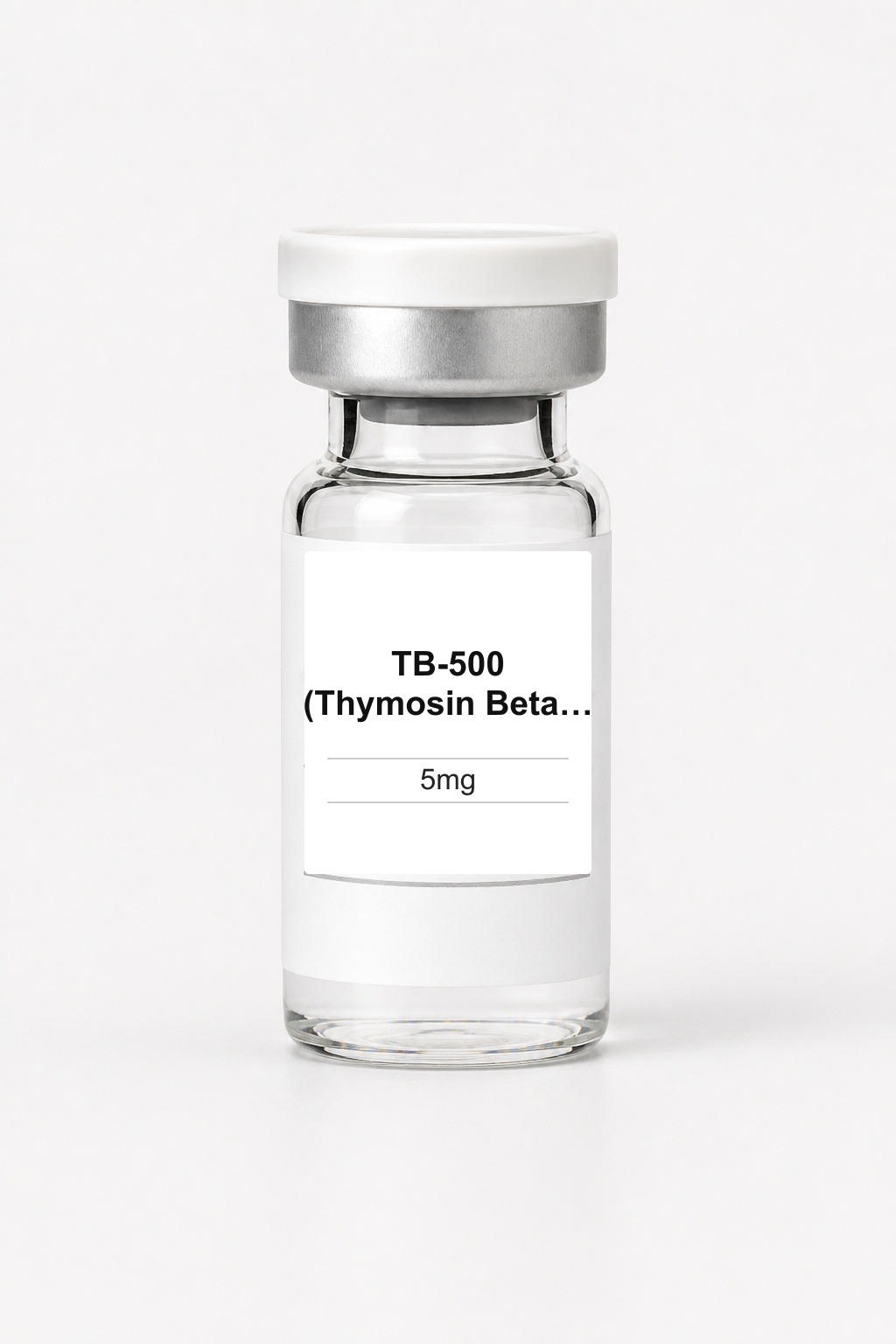
TB-500
Discussed for muscle, tendon and soft-tissue recovery (thymosin β4–related).
Also known as: Thymosin Beta-4 fragment · TB4
What it is used for
- Tissue recovery and flexibility (community narrative)
- Return from overload / injuries (discussion)
- Thymosin β4 fragment — cell migration (hypotheses)
- Often paired with BPC-157 in research stacks
Disclaimer — Research Use Only
Materials listed on this website are supplied for laboratory research only (Research Use Only). They are not intended for human consumption.
Quick Facts
- Category
- Recovery
- Research status
- Mostly preclinical
- Strength (illustration)
- 10 mg
- Price-list variants
- 5mg · 10mg · 20mg
- Also known as
- Thymosin Beta-4 fragment, TB4
Overview
TB-500 is a trade/research name linked to thymosin beta-4 fragments. Literature mainly covers cell migration and tissue repair in models.
What it is used for
Community and research context — not a medical indication or treatment advice.
- Tissue recovery and flexibility (community narrative)
- Return from overload / injuries (discussion)
- Thymosin β4 fragment — cell migration (hypotheses)
- Often paired with BPC-157 in research stacks
TB-500 (a fragment related to thymosin β4) is discussed for recovery, mobility and return to training after injuries. As with BPC-157, community talk outruns clinical evidence quality. Treat it as education about repair hypotheses — not a proven “tendon glue”.
For people comparing recovery peptides and learning literature limits.
How it works
Thymosin β4 is involved in actin regulation and cell migration. TB-500 is studied as a fragment linked to those processes. Translation to human sports injuries remains uncertain.
Thymosin β4 participates in actin organisation and cell migration. Extrapolation to human effects requires caution.
How it is used (research context)
From protocols and documentation — not a dosing guide.
In research most often: reconstitution + SC injections. Forum “loading / maintenance” schemes are not a medical standard. Priority: diagnosis, physio, training load.
Key takeaways
- Recovery — not GLP-1 metabolism
- Often paired with BPC-157
- Evidence: caution, many anecdotes
- MarcinLabs does not run injury protocols
Who this content is for: For people comparing recovery peptides and learning literature limits.
Current research
Mostly preclinical
Human clinical data are limited; most conclusions come from preclinical models.
Contexts from literature — not therapeutic indications.
- Cell migration
- Muscle and soft-tissue regeneration (models)
- Angiogenesis (hypotheses)
- Combined protocols with BPC-157 (without clinical validation)
Potential side effects
- Insufficient human safety data
- Risk of products with unclear purity
- Theoretical angiogenesis-related risks in oncology contexts — medical assessment required
Frequently asked questions
Are TB-500 and thymosin beta-4 the same?
Related scientific papers
Related YouTube videos
YouTube HubNo matching videos — see the YouTube Hub.
Related MarcinLabs articles
ResearchRelated peptides
In the research library
TB-500 (Thymosin Beta-5 Acetate) · BPC-157 5mg + TB-500 5mg · BPC-157 10mg + TB-500 10mg