Recovery
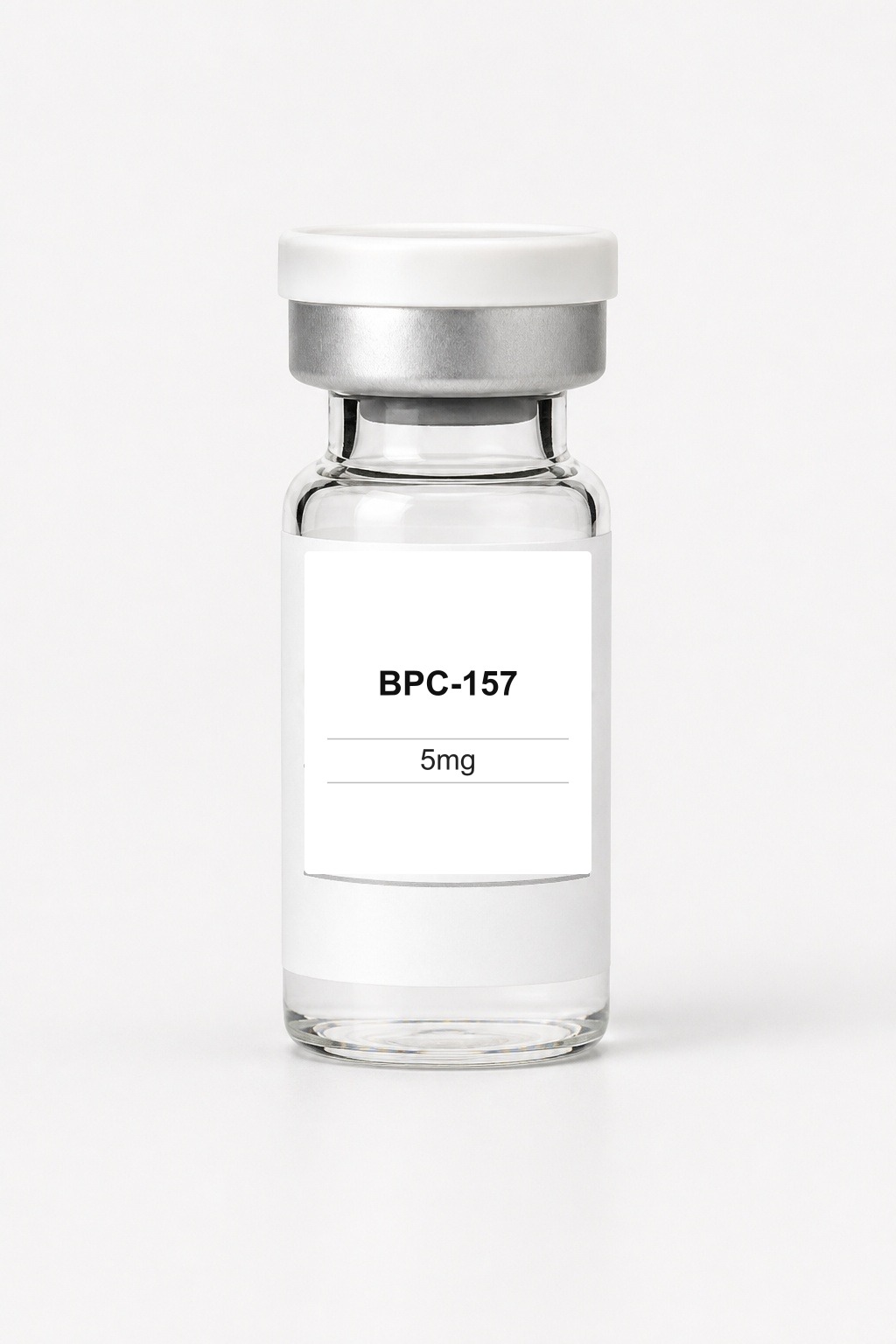
BPC-157
Discussed for tendon, joint and gut healing and soft-tissue recovery (mostly preclinical data).
What it is used for
- Soft-tissue recovery (mostly preclinical)
- Gut / mucosal context (discussion)
- Muscle–tendon injuries (community narrative)
- Healing support in animal models
Disclaimer — Research Use Only
Materials listed on this website are supplied for laboratory research only (Research Use Only). They are not intended for human consumption.
Quick Facts
- Category
- Recovery
- Research status
- Mostly preclinical
- Strength (illustration)
- 10 mg
- Price-list variants
- 5mg · 10mg · 20mg
- Also known as
- —
Overview
BPC-157 is a pentadecapeptide heavily studied in animal models for tissue healing. Human clinical evidence remains limited.
What it is used for
Community and research context — not a medical indication or treatment advice.
- Soft-tissue recovery (mostly preclinical)
- Gut / mucosal context (discussion)
- Muscle–tendon injuries (community narrative)
- Healing support in animal models
BPC-157 is one of the most discussed “recovery” peptides. People link it to tendon/muscle injuries, gut issues and general healing. The problem: most data are animal / preclinical models, not large solid human clinical trials. Popularity ≠ proven clinical efficacy.
For people reading recovery peptides critically and wanting to separate marketing from literature.
How it works
Proposed mechanisms include angiogenesis, inflammation modulation and the local tissue-repair environment. Pathways are not fully settled; publication quality varies. Treat the mechanism as a research hypothesis.
Research hypotheses include effects on angiogenesis, cell migration and inflammatory processes in tissues. Mechanisms are not fully clinically confirmed.
How it is used (research context)
From protocols and documentation — not a dosing guide.
Communities mention subcutaneous, local and oral forms — observations, not MarcinLabs recommendations. Reconstitution and sterility need competence. For injuries the gold standard remains diagnosis and rehab, not a forum peptide.
Key takeaways
- Use-case: recovery / gut — not GLP-1-style body-composition research
- Human evidence: limited relative to hype
- Often stacked with TB-500 in community narrative
- Long-term safety is not well characterised
Who this content is for: For people reading recovery peptides critically and wanting to separate marketing from literature.
Current research
Mostly preclinical
Most publications are preclinical. Large, well-controlled phase III clinical trials are lacking.
Contexts from literature — not therapeutic indications.
- Tendon and ligament healing (models)
- Gastrointestinal protection (models)
- Soft-tissue regeneration
- Inflammation modulation
Potential side effects
- Lack of solid long-term human safety data
- Uncertain quality of preparations outside regulated channels
- Unknown interactions with drugs and other peptides
Frequently asked questions
Is BPC-157 “proven in humans”?
Related scientific papers
Related YouTube videos
YouTube HubNo matching videos — see the YouTube Hub.
Related MarcinLabs articles
ResearchRelated peptides
In the research library
BPC-157 · BPC-157 5mg + TB-500 5mg · BPC-157 10mg + TB-500 10mg