Growth axis
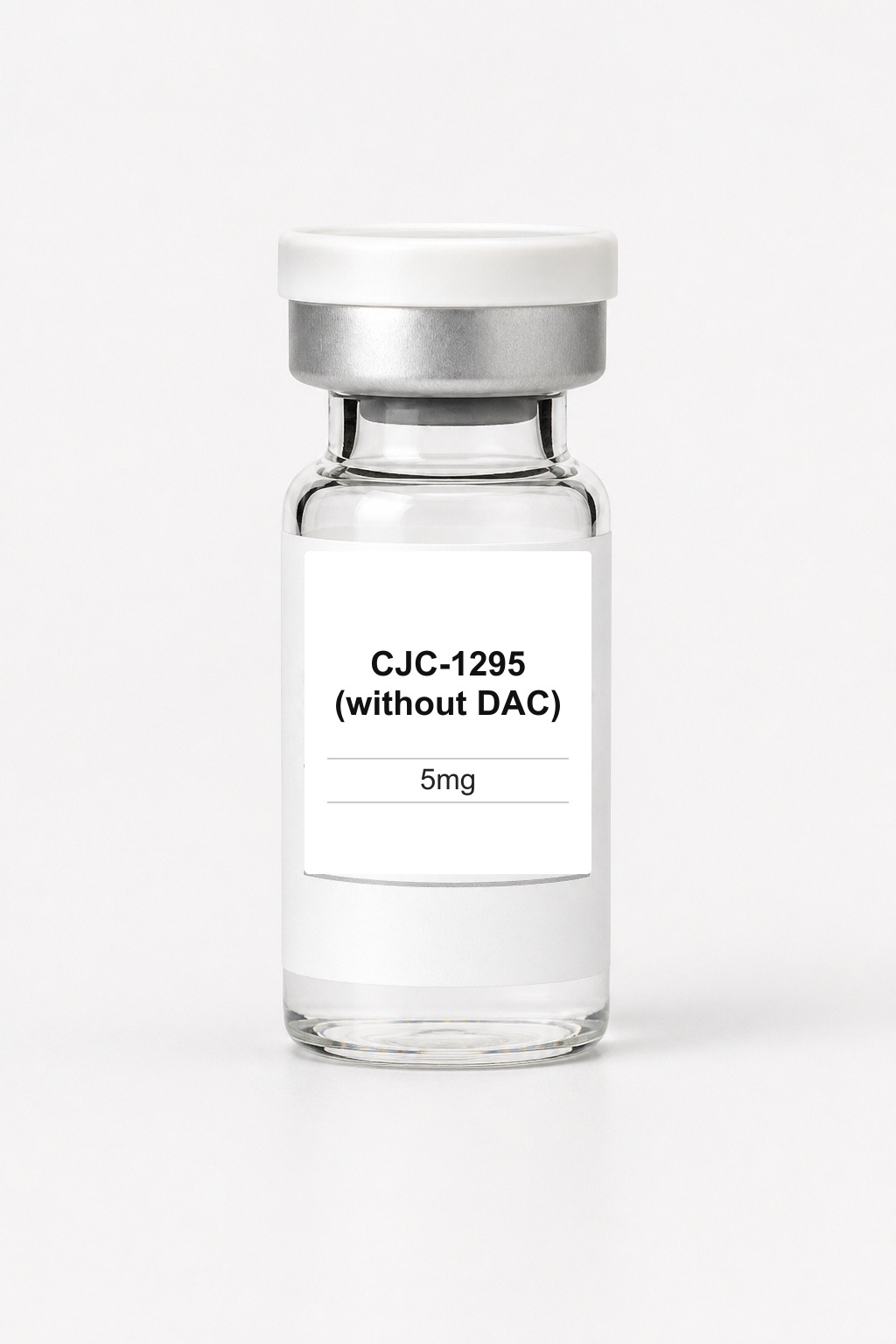
CJC-1295
Used for GH/IGF-1 stimulation and body composition — with-DAC and no-DAC variants.
Also known as: CJC1295 · CJC with DAC · CJC without DAC
What it is used for
- GHRH analogue — longer GH stimulation
- no DAC vs DAC variants (different half-life)
- Sleep, recovery, body composition (discussion)
- Often stacked with ipamorelin
Disclaimer — Research Use Only
Materials listed on this website are supplied for laboratory research only (Research Use Only). They are not intended for human consumption.
Quick Facts
- Category
- Growth axis
- Research status
- Early clinical research
- Strength (illustration)
- 5 mg
- Price-list variants
- 10mg · 5mg · 2mg
- Also known as
- CJC1295, CJC with DAC, CJC without DAC
Overview
CJC-1295 is a GHRH analogue available as with-DAC (longer action) and without-DAC (shorter pulses, often combined with ipamorelin) variants. Educational content is not a dosing protocol.
What it is used for
Community and research context — not a medical indication or treatment advice.
- GHRH analogue — longer GH stimulation
- no DAC vs DAC variants (different half-life)
- Sleep, recovery, body composition (discussion)
- Often stacked with ipamorelin
CJC-1295 is a GHRH analogue. The “no DAC” variant is shorter-acting and often paired with a GHRP (e.g. ipamorelin). The DAC variant has a longer half-life and different dynamics. Community talk covers sleep, recovery and body composition — it is not an appetite peptide like GLP-1.
For people comparing GHRH analogues and wanting to understand the DAC difference.
How it works
It binds the GHRH receptor and prolongs / amplifies GH pulses versus native GHRH. DAC changes pharmacokinetics. Variant choice changes frequency and exposure profile — a clinical / research decision, not “whatever is in stock”.
It stimulates the pituitary GHRH receptor, increasing GH release. DAC modifies pharmacokinetics; the no-DAC variant is intended to closer mimic physiological pulses in research assumptions.
How it is used (research context)
From protocols and documentation — not a dosing guide.
Research: reconstitution, SC route. Schedules differ dramatically between no DAC (more frequent) and DAC (less frequent). MarcinLabs does not choose your variant or give doses.
Key takeaways
- Check the label: DAC vs no DAC are not the same
- Use-case: GH axis, not RETA-style body-composition research
- Stack with ipa = popular forum motif
- Medical monitoring of the growth axis makes sense
Who this content is for: For people comparing GHRH analogues and wanting to understand the DAC difference.
Current research
Early clinical research
Some data come from earlier clinical studies; pharmaceutical availability and legal status differ by region.
Contexts from literature — not therapeutic indications.
- GH/IGF-1 axis
- Pharmacokinetics of DAC / no-DAC variants
- Body composition and recovery (limited data)
- Combinations with GHS (ipamorelin)
Potential side effects
- Water retention, tingling, glucose effects — reported in GHRH/GHS contexts
- Risk of choosing the wrong variant (DAC vs no-DAC)
- Caution needed with oncologic and endocrine conditions
Frequently asked questions
Which variant is “better”?
Related scientific papers
Related YouTube videos
YouTube HubNo matching videos — see the YouTube Hub.
Related MarcinLabs articles
ResearchNo direct notes — see the Research Hub.
Related peptides
In the research library
CJC-1295 (no DAC) + Ipamorelin · CJC-1295 (without DAC) · CJC-1295 (with DAC)