GLP-1 / metabolic
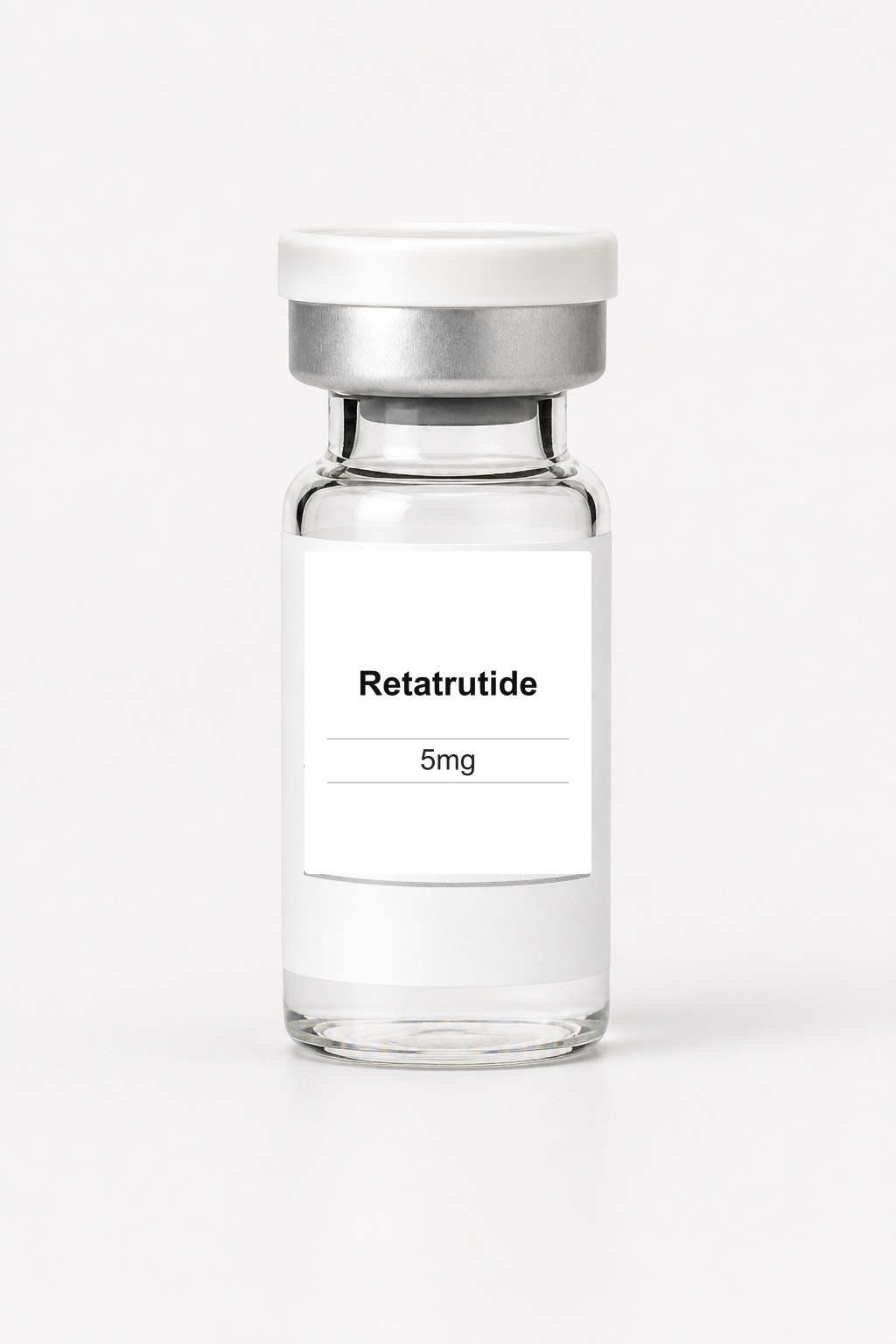
Retatrutide
Used in research on substantial body-composition research, appetite and metabolism (GIP/GLP-1/glucagon triple agonist).
Also known as: RETA · LY3437943
What it is used for
- Body-weight and fat-mass reduction (clinical research)
- Appetite control / satiety
- Metabolic markers and glycaemia
- Body composition (fat vs lean mass in studies)
Disclaimer — Research Use Only
Materials listed on this website are supplied for laboratory research only (Research Use Only). They are not intended for human consumption.
Quick Facts
- Category
- GLP-1 / metabolic
- Research status
- Advanced clinical research
- Strength (illustration)
- 30 mg
- Price-list variants
- 5mg · 10mg · 15mg · 20mg
- Also known as
- RETA, LY3437943
Overview
Retatrutide is an experimental peptide studied as an agonist of GIP, GLP-1 and glucagon receptors. In research practice it mainly appears for body-weight reduction, appetite control and metabolic markers. MarcinLabs covers it educationally only — not as a medicine or medical advice.
What it is used for
Community and research context — not a medical indication or treatment advice.
- Body-weight and fat-mass reduction (clinical research)
- Appetite control / satiety
- Metabolic markers and glycaemia
- Body composition (fat vs lean mass in studies)
Retatrutide most often appears in the context of obesity and substantial body-weight reduction. Phase 2 trials assessed body-composition research, body composition and metabolic markers. In fitness / research communities it is discussed as a “next step” after semaglutide and tirzepatide — because it targets three receptors (GIP, GLP-1, glucagon). MarcinLabs covers this educationally: not therapeutic advice and not encouragement for self-treatment.
Retatrutide content is for people who want to understand mechanisms and literature (e.g. following Marcin’s journey) — not for designing self-treatment. Medical decisions always belong with a clinician.
How it works
Retatrutide is studied as a triple agonist of GIP, GLP-1 and glucagon receptors. GLP-1 and GIP are incretin pathways linked to satiety, gastric emptying and glucose handling. The glucagon component is discussed in relation to energy expenditure and fat metabolism. In the literature this is framed as both lower appetite and potentially higher energy use — the exact profile depends on dose, exposure time and study protocol.
In research, retatrutide combines incretin pathways (GLP-1/GIP) with a glucagon component that may influence energy expenditure and fat metabolism. The exact effect profile depends on dose, exposure time and study protocol.
How it is used (research context)
From protocols and documentation — not a dosing guide.
In clinical trials retatrutide was given as a subcutaneous injection, usually on a weekly study schedule. Research material is often lyophilised and needs reconstitution (sterility, diluent, storage). MarcinLabs does not publish self-dosing, escalation schemes or DIY protocols. Any use outside medical supervision and local law is risky.
Key takeaways
- Most associated with weight reduction — not “pumps” or joint repair
- GI profile (nausea, vomiting, diarrhoea) is typical for the incretin class
- Status: advanced research — not a universal OTC medicine
- On MarcinLabs: education + journey documentation, not selling a drug
Who this content is for: Retatrutide content is for people who want to understand mechanisms and literature (e.g. following Marcin’s journey) — not for designing self-treatment. Medical decisions always belong with a clinician.
Current research
Advanced clinical research
Retatrutide is in advanced clinical development. Regulatory status and availability can change — always check current scientific sources and regulator decisions.
Contexts from literature — not therapeutic indications.
- Body-weight reduction in clinical trials
- Metabolic markers and glycaemia
- Effects on body composition
- Tolerability and adverse-event profile
Potential side effects
- Gastrointestinal symptoms (nausea, vomiting, diarrhoea) reported with incretin agonists in trials
- Dehydration risk when food and fluid intake fall
- Possible effects on gastric emptying rate
- Long-term safety is still under study
- Self-use without medical supervision can be risky
Frequently asked questions
Is retatrutide a pharmacy medicine?
How does it differ from semaglutide and tirzepatide?
Related scientific papers
Triple–Hormone-Receptor Agonist Retatrutide for Obesity — A Phase 2 Trial
Jastreboff et al. · 2023 · New England Journal of Medicine
Key phase 2 body-weight study.
PubMed / source →Related YouTube videos
YouTube Hub



Related MarcinLabs articles
ResearchNo direct notes — see the Research Hub.
Related peptides
Tirzepatide
Used for weight reduction, appetite and glycaemic control (dual GIP/GLP-1 agonist).
Semaglutide
Used in research and clinic for body weight, appetite and type 2 diabetes (GLP-1 agonist).
Cagrilintide
Used in research on satiety, appetite and body weight (amylin analogue; often with GLP-1).
In the research library
Retatrutide · Retatrutide 5mg + Cagrilintide 5mg