Cellular metabolism
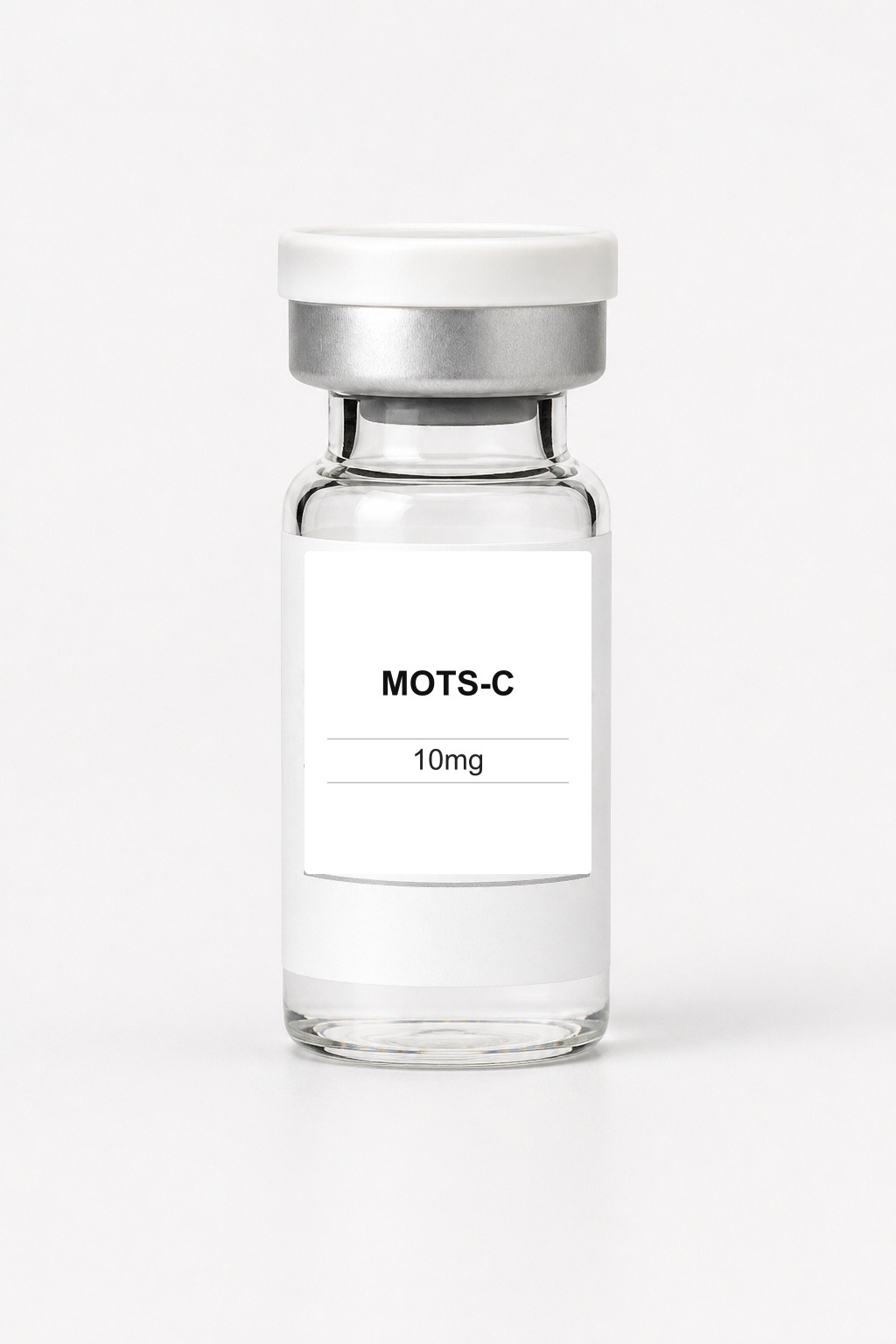
MOTS-c
Discussed for glucose metabolism, performance and energetic adaptation (mitochondrial peptide).
Also known as: MOTS-C
What it is used for
- Cellular metabolism / energy (research models)
- Insulin sensitivity (preclinical + discussion)
- “Mitochondrial” and longevity context
- Adaptation to metabolic stress in studies
Disclaimer — Research Use Only
Materials listed on this website are supplied for laboratory research only (Research Use Only). They are not intended for human consumption.
Quick Facts
- Category
- Cellular metabolism
- Research status
- Mostly preclinical
- Strength (illustration)
- 10 mg
- Price-list variants
- 10mg · 20mg · 40mg
- Also known as
- MOTS-C
Overview
MOTS-c is a mitochondrially encoded peptide analysed in metabolic and exercise models. Human evidence remains limited relative to its popularity in research communities.
What it is used for
Community and research context — not a medical indication or treatment advice.
- Cellular metabolism / energy (research models)
- Insulin sensitivity (preclinical + discussion)
- “Mitochondrial” and longevity context
- Adaptation to metabolic stress in studies
MOTS-c is a mitochondrial peptide popular in longevity and metabolism niches. People discuss insulin sensitivity, “cellular energy” and body composition — but hard human evidence is clearly weaker than social-media hype. On MarcinLabs we treat it as an educational topic with a strong dose of scepticism.
For people interested in longevity and cellular metabolism who accept evidence uncertainty.
How it works
A peptide encoded in mtDNA; preclinical models studied effects on metabolic pathways (including AMPK / energy homeostasis — simplified). Extrapolating from mice to humans without good RCTs is a classic error.
In preclinical models MOTS-c is linked to glucose-metabolism regulation and adaptation to energetic stress; human mechanisms need further study.
How it is used (research context)
From protocols and documentation — not a dosing guide.
Research documentation most often: reconstitution + injections (often SC). No approved universal “for health” schedule. Source quality, sterility and legality are critical — and outside MarcinLabs advice.
Key takeaways
- Hype > number of large clinical trials
- Not a GLP-1 substitute for body-composition research
- Read primary literature, not only reels
- Education ≠ endorsement
Who this content is for: For people interested in longevity and cellular metabolism who accept evidence uncertainty.
Current research
Mostly preclinical
Preclinical data and early observations dominate. There are no large long-term phase III trials for typical “lifestyle” uses.
Contexts from literature — not therapeutic indications.
- Glucose metabolism (models)
- Exercise adaptation
- Metabolic ageing (research hypotheses)
- Mitochondrial signalling
Potential side effects
- Insufficient long-term human safety data
- Unknown interaction profile
- Contamination risk in products outside regulated supply chains
Frequently asked questions
Does MOTS-c “boost energy”?
Related scientific papers
Related YouTube videos
YouTube HubNo matching videos — see the YouTube Hub.
Related MarcinLabs articles
ResearchNo direct notes — see the Research Hub.
Related peptides

In the research library
MOTS-C